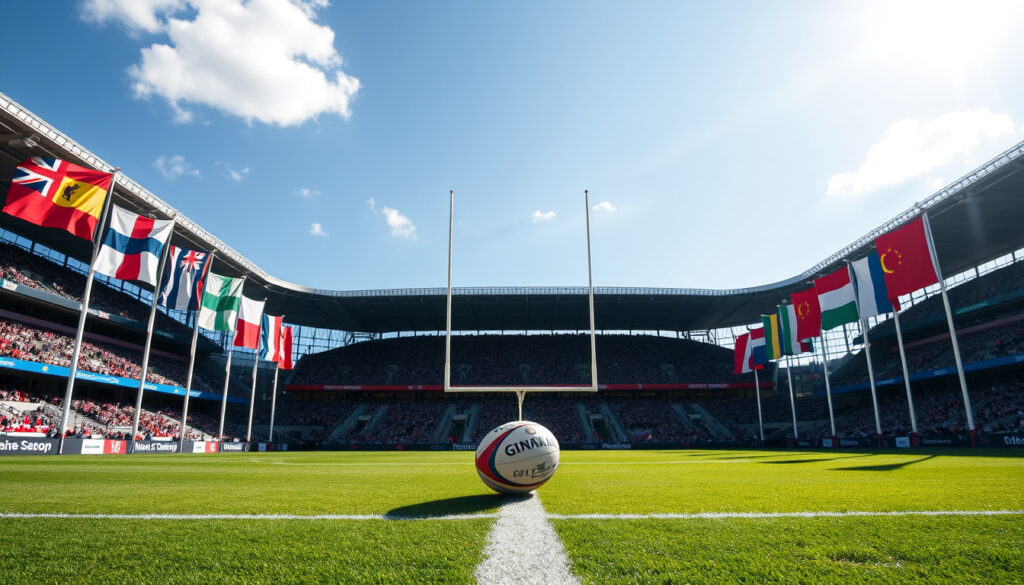
2026 Rugby League World Cup: Hosts, Dates, Tickets & History
For rugby league fans, few announcements carry the weight of a World Cup host reveal. After a rollercoaster of cancellations and withdrawals, the 2026 edition is finally locked in — and it’s heading to the southern hemisphere for the first time since 2017. Australia, New Zealand, and Papua New Guinea will co-host the men’s, women’s, and wheelchair tournaments across October and November 2026. Here’s everything you need to know, from the draw and qualified teams to tickets and what’s changed since the last tournament.
Hosts: Australia, New Zealand, Papua New Guinea ·
Dates: Oct–Nov 2026 ·
Men’s Teams: 10 ·
Final: 15 Nov 2026, Suncorp Stadium ·
Defending Champion: Australia (men’s)
Quick snapshot
- Australia, New Zealand & PNG co-host (NRL.com, official tournament site)
- Men’s tournament: 10 teams (ESPN NRL)
- Final at Suncorp Stadium, 15 Nov 2026 (Queensland.com, official tourism site)
- Exact schedule of matches beyond final (WA Government statement)
- Full list of qualified teams for women’s and wheelchair tournaments (Wikipedia overview)
- First planned for USA/Canada (withdrawn 2018) (Wikipedia)
- France awarded 2022, pulled out May 2023 (ESPN NRL)
- Australia confirmed as primary host on 24 July 2024 (International Rugby League)
- Ticket pre-sales via rlwc2026.com (WA Government)
- Full fixture list expected early 2026 (NRL.com)
Here’s a quick-reference table of key facts about the tournament.
| Fact | Value |
|---|---|
| First World Cup | 1954 (France) |
| Most Titles | Australia (12) |
| Previous Winner (men’s, 2021) | Australia |
| 2026 Primary Host | Australia |
| Co-Hosts | New Zealand, Papua New Guinea |
| Men’s Teams | 10 (reduced from 16) |
| Women’s Teams | 8 |
| Wheelchair Teams | 8 |
| Final Venue | Suncorp Stadium, Brisbane |
| Final Date | 15 November 2026 |
| Tournament Duration | 5 weeks (Oct–Nov 2026) |
| Host Cities | Nine across three nations |
Who will host the 2026 Rugby League World Cup?
The 2026 Rugby League World Cup will be hosted by Australia, with New Zealand and Papua New Guinea co-hosting matches across the men’s, women’s, and wheelchair tournaments. Australia was confirmed as the primary host on 24 July 2024 by the International Rugby League (IRL), the sport’s global governing body. This marks the first time the men’s World Cup has been staged in the southern hemisphere since 2017, and the first time Papua New Guinea has co-hosted a global rugby league event.
The hosting journey was turbulent. The tournament was originally awarded to the United States and Canada for 2025, but that plan was withdrawn in 2018 due to financial concerns. France was then selected in 2022, but pulled out in May 2023 after the French government could not meet hosting criteria. The IRL cancelled the 2025 tournaments on 3 August 2023 and announced a southern hemisphere event for 2026.
After two failed host bids, the southern hemisphere trio — Australia, New Zealand and PNG — gives rugby league its most stable base yet for a major event. The risk of further cancellations is low because the primary host owns the sport’s biggest domestic infrastructure.
The pattern: three nations, nine cities, and a tournament that has pivoted from North America to Europe to Oceania in less than a decade. For fans, this means shorter travel distances between matches — but also the headache of navigating multiple time zones and visa requirements.
Where and when is the 2026 Rugby League World Cup?
Host cities and venues
Nine cities across Australia, New Zealand, and Papua New Guinea will stage matches. Perth, Australia, has been confirmed as a host city — the Western Australian Government announced that HBF Park will host two double-header rounds, featuring Australia vs England among other fixtures. The other host cities are expected to include Sydney, Brisbane, Melbourne, Auckland, Port Moresby, and Wollongong (for the wheelchair event).
Match schedule and final date
The tournament spans five weeks in October and November 2026. The exact fixture list is yet to be published, but the final is set for 15 November 2026 at Brisbane’s Suncorp Stadium (capacity 52,500), as noted by Queensland.com’s official event guide.
With the draw already released (23 November 2025) but exact match dates still pending, early ticket buyers should monitor rlwc2026.com for schedule drops. The biggest risk for fans: booking flights to a city that may end up hosting only lower-draw matches.
Why this matters: the concentration of matches in Australia’s eastern seaboard plus Perth means trans-continental travel is required even for domestic fans. For international visitors, a multi-city itinerary demands careful planning.
What is the history of the Rugby League World Cup?
First tournament in 1954
The Rugby League World Cup was first held in France in 1954, with Great Britain winning the inaugural title. The tournament has been staged every four years since, with interruptions only in the early decades.
Australia’s dominance
Australia has won the most titles — 12 in total — including the most recent men’s tournament in 2021 (played in 2022 due to the pandemic). The Kangaroos defeated Samoa in the final at Old Trafford, Manchester. The period from 1975 to 2021 saw Australia win 11 out of 13 editions, cementing their status as the sport’s superpower.
Evolution and expansion
The men’s tournament expanded from 8 to 16 teams in 2021. For 2026, it has been reduced to 10 teams — a move the IRL says will improve competitiveness. The women’s and wheelchair tournaments, both introduced in 2000, will feature 8 teams each.
The pattern: the World Cup has grown beyond a one-nation event, but the number of men’s teams has oscillated as organisers balance global reach against competitive quality.
Which teams have qualified for the 2026 Rugby League World Cup?
Automatic qualifiers from 2022 quarter-finals
The following eight teams secured automatic qualification by reaching the quarter-finals of the previous men’s World Cup: Australia, Samoa, New Zealand, England, Lebanon, Tonga, Fiji, and Papua New Guinea, as confirmed by the International Rugby League’s official announcement. The remaining two men’s spots will be filled via regional qualification tournaments in Europe, Asia-Pacific, and the Americas.
Women’s and wheelchair qualification
The women’s and wheelchair tournaments each feature 8 teams. Full qualification details for those categories have not yet been released. The reigning women’s champions are Australia (2021), and the wheelchair champions are England (2021).
The number of men’s teams has been cut from 16 to 10, yet the tournament now stretches across three countries. The trade-off: higher quality matches per game, but fewer nations get a shot at the main event. For emerging rugby league nations like Jamaica or Greece, the 2026 path just got harder.
The implication: automatic spots went to every quarter-finalist from 2021, meaning no new men’s team has yet broken through. Regional qualifiers will determine whether any fresh face makes the 10-team cut.
How does the draw work for the 2026 Rugby League World Cup?
Draw format and seeding
The draw and pools for the men’s tournament were announced on 23 November 2025, according to Wikipedia’s tournament page. The 10 teams are divided into two groups of five. Seeding is based on the IRL World Rankings, with Australia (No. 1) and New Zealand (No. 2) heading separate groups.
Group stage and knockout progression
Each team plays four group matches. The top four from each group (eight teams total) advance to the quarter-finals, keeping the knockout bracket the same size as in 2021. The top two from each group get an easier draw in the quarter-finals.
The format shift from four groups of four to two groups of five means every team plays at least four games, avoiding the early exit that a single bad result can cause in smaller groups. For broadcasters, it guarantees more matches featuring the top teams.
How can I buy tickets for the 2026 Rugby League World Cup?
Official ticketing partner
All official tickets are sold through the tournament website at rlwc2026.com (the official tournament portal). The Western Australian Government’s media statement confirms that ticket purchases are handled via this site, with Ticketmaster as the primary ticketing platform.
On-sale dates and pre-sale access
Pre-sale access is available for fans who register on the official website. General sale dates have not yet been announced but historically open 6–9 months before the tournament. Hospitality packages and multi-match bundles are expected to be offered.
For fans planning to attend: the earlier you register, the better your chance at seats for high-demand matches like Australia vs England in Perth, or the final in Brisbane. The catch: buying before the full fixture list is published means gambling on which pool matches you’ll see. For those eager to secure their spot at the 2026 Rugby League World Cup, registering early is recommended, and you can find more information about the tournament at Taco Bell Nacho Fries.
Step-by-step guide to buying tickets
- Go to rlwc2026.com and register for pre-sale updates.
- Check the official fixture list when released (expected early 2026).
- Choose your matches — consider double-header rounds in Perth for maximum value.
- Select ticket category: standard, premium, or hospitality.
- Complete purchase via Ticketmaster’s secure checkout.
- Book travel and accommodation after confirming match dates.
The trade-off: buying before the full schedule drops locks in the best seats, but you risk paying for matches that end up at inconvenient times. Many fans will wait for the official calendar — and face higher prices as a result.
Early registrants secure better seats, but risk schedule uncertainty. The tournament expects high demand for top matches.
Timeline: The road to 2026
- 1954 – First Rugby League World Cup in France, won by Great Britain.
- 1975–2021 – Australia dominates, winning 11 of 13 editions.
- 2021 (played 2022) – Australia wins in England; tournament expands to 16 men’s teams.
- 2018 – USA/Canada hosting plan withdrawn.
- 2022 – France awarded hosting rights.
- May 2023 – France pulls out.
- 3 August 2023 – IRL cancels 2025 tournaments, announces southern hemisphere event for 2026.
- 24 July 2024 – Australia confirmed as primary host by IRL.
- 23 November 2025 – Draw and pools announced; Te Kaha Stadium (New Zealand) added as venue.
- October–November 2026 – Tournament takes place across nine cities.
- 15 November 2026 – Men’s final at Suncorp Stadium, Brisbane.
The timeline signal: from North America to France to the South Pacific — the tournament’s route has been anything but straight. The 2026 edition is the result of emergency planning after two host failures, which is why the IRL locked in a rugby league heartland rather than a new market.
What’s confirmed and what’s still unclear
Confirmed facts
- Hosts: Australia, New Zealand, Papua New Guinea (NRL.com)
- Men’s tournament: 10 teams (ESPN)
- Final: 15 Nov 2026, Suncorp Stadium (Queensland.com)
- Perth to host double-header rounds at HBF Park (WA Government)
- Eight men’s teams automatically qualified (IRL)
- Official tickets via rlwc2026.com (tournament site)
What’s unclear
- Exact match dates and kick-off times
- Complete list of women’s and wheelchair qualifiers
- Host cities beyond Perth and the final venue (confirmed)
- Broadcast rights for international markets
- Prize money distribution
- Ticket pricing tiers for all matches
The split between confirmed and unclear reflects the tournament’s still‑evolving nature.
Quotes and expert perspectives
“We are thrilled to see the Rugby League World Cup return to Australia for the first time since 2017, and to bring New Zealand and Papua New Guinea along for the ride.”
— International Rugby League, official statement (24 July 2024)
“Perth is a world-class sports city and we can’t wait to welcome the world’s best rugby league players for the World Cup.”
— Western Australian Government media statement (23 November 2025)
“The reduction from 16 to 10 men’s teams is controversial but ensures a higher standard of competition across the board.”
— ESPN NRL analysis
“The draw has created some blockbuster pool matches that will draw huge crowds and set the tone for the tournament.”
— NRL.com, official tournament site
The 2026 Rugby League World Cup is more than a sporting event — it’s a test of whether the sport can stage a truly multi-nation tournament after years of false starts. For Australian rugby league fans, the choice is clear: book early, brace for cross-continent travel, and prepare for a tournament that finally puts the southern hemisphere centre stage. For international supporters, the question is whether to commit now or wait for broadcast details — risking sold-out finals in the process.
Fans can find the full schedule and ticketing information on the official 2026 Rugby League World Cup details page.
Frequently asked questions
What is the prize money for the 2026 Rugby League World Cup?
Prize money details have not been officially announced for the 2026 tournament. For context, the men’s winners in 2021 received AUD $1.5 million. Expect a similar or slightly higher purse in 2026.
How many teams will compete in the 2026 Rugby League World Cup?
There are three tournaments: men’s (10 teams), women’s (8 teams), and wheelchair (8 teams). Combined, 26 teams will compete across the three events.
Will there be a women’s tournament in 2026?
Yes, the women’s tournament is confirmed for 2026 with 8 teams. Australia are the defending champions, having won the 2021 edition.
How can I watch the 2026 Rugby League World Cup live?
Broadcast rights have not yet been announced for most markets. Historically, the tournament has been shown on Nine Network (Australia), BBC (UK), and Fox League (pay TV). Check rlwc2026.com for updates.
Which country has won the Rugby League World Cup the most times?
Australia has won the men’s tournament a record 12 times, including the most recent edition in 2021 (played in 2022).
Who is the current Rugby League World Cup champion?
Australia are the defending men’s champions (2021). England hold the wheelchair title. Australia are the reigning women’s champions.
What is the format of the knockout stage?
The top four teams from each of the two groups (eight total) advance to the quarter-finals. From there it’s a straight knockout: quarter-finals, semi-finals, and the final on 15 November 2026 at Suncorp Stadium.
Are there any changes to the rules for 2026?
No major rule changes have been announced specifically for the 2026 World Cup. The regular international rugby league laws apply, including the six-again rule and golden-point extra time for knockout matches.
More related posts
 Dark Side of the Moon Explained: Album or Far Side?
 Niecy Nash: Biography, Identity, Wife, and Career Milestones
 Dyson Heppell: Wife, Son, Name Change & Coaching Career
 Lamine Yamal Stats: Goals, Assists & Value 2025
 Raymond Ablack: Ethnicity, Parents, Sister, Movies & TV Shows
 Chrissie Swan: Big Brother to Radio, Family & Weight Loss
 Yao Ming: Height, Career, Retirement, and Life After the NBA
 Jack Sparrow: Real Name, Historical Inspiration & Myths
