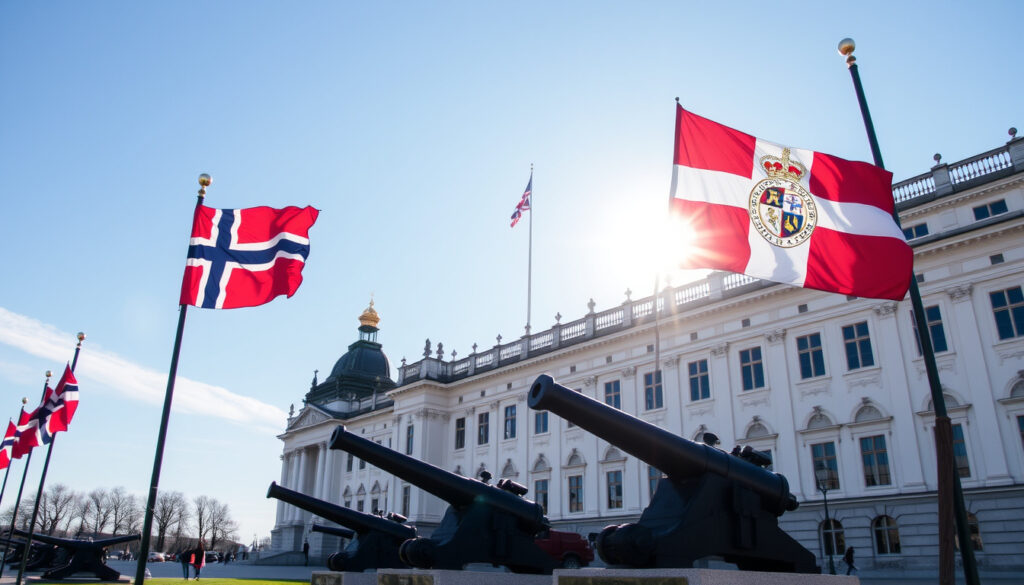
Danish Royal Family: Members, History & Latest News
When Queen Margrethe II stepped down on live television at the end of 2023, Denmark did something it hadn’t done in nearly 900 years — voluntarily transfer the crown. In January 2024, her son Frederik became King Frederik X, and the oldest continuous monarchy in the world outside Japan entered a new chapter. Yet even as the palace introduced modern touches — a consort from Australia, heirs in university halls, and titles quietly revised — the institution quietly manages scandals that would make tabloids elsewhere blush quietly into their columns.
Current Monarch: King Frederik X · Monarchy Age: Over 1000 years · Key Members: King Frederik X, Queen Mary, Crown Prince Christian · Former Monarch: Queen Margrethe II · Official Site: kongehuset.dk
Quick snapshot
- Denmark’s monarchy traces back over 1000 years per official records (Denmark.dk (Official))
- King Frederik X ascended on 14 January 2024 following Queen Margrethe II’s abdication announcement (Denmark.dk (Official))
- Exact public approval percentages are debated across different polling periods
- Whether additional titles will be restructured remains uncertain pending palace announcements
- Crown Prince Christian began military training in February 2025, following his gap year in East Africa (Vogue Scandinavia)
- Crown Prince Christian’s formal preparation for eventual reign continues through education and military service
| Role | Name | Notes |
|---|---|---|
| Head of State | King Frederik X | Ascended 14 January 2024 |
| Consort | Queen Mary | Australian-born, married 2004 |
| Heir Apparent | Crown Prince Christian | Born 15 October 2005 |
| Former Monarch | Queen Margrethe II | Abdicated after 53+ years |
| Monarchy Duration | Over 1000 years | Oldest outside Japan |
| Official Website | kongehuset.dk | Royal Household |
Is there still a royal family in Denmark?
Current status
Denmark maintains one of the world’s oldest continuous monarchies, with the Royal House tracing its lineage back over a thousand years. The current monarchy operates as a constitutional institution, with the monarch serving as head of state while day-to-day governance falls to elected officials. According to the official Denmark.dk portal, the monarchy’s survival across centuries owes much to its ability to adapt while retaining ceremonial and symbolic functions that Danes continue to value.
Key figures today
King Frederik X became sovereign on 14 January 2024, following Queen Margrethe II’s historic decision to abdicate. She announced her intention on live television at the end of 2023, marking the first voluntary abdication in the Danish monarchy in nearly 900 years according to Elle Decor (Design and Lifestyle Publication). The transition drew significant international attention, with Frederik and his wife Mary Donaldson immediately becoming faces of a modernizing institution.
King Frederik carries an unusual burden: his mother abdicated while still healthy, making his reign both a continuation and a deliberate rupture with tradition. Unlike predecessors who reigned until death, Frederik must establish his own legitimacy while honoring Margrethe’s legacy.
Why was Prince Felix stripped of his title?
Background on Prince Felix
Prince Felix was born on 22 July 2002 as the second son of Prince Joachim and Princess Alexandra. Following his father’s younger brother’s accession to the throne as King Frederik X, Prince Felix’s position within the royal hierarchy shifted. The palace has historically managed the size of the active royal family, and adjustments to who holds princedoms and who does not represent routine house-keeping for an institution supporting itself through public funding.
Reasons for title change
In September 2022, Queen Margrethe II announced that Prince Felix and his brother Prince Henrik would lose their princely titles and assume the count and countess titles of Monpezat instead. The decision came as part of a streamlining effort to ensure only working members of the royal family would carry the “His/Her Royal Highness” designation. Prince Felix became Count Felix of Monpezat, reflecting the adult branch of his father’s line rather than the direct line to the throne. This restructuring mirrors practices in other European monarchies where non-working royals are gently moved to the periphery of official duties while retaining family connection and aristocratic status.
Title changes typically receive significant attention, yet the practical impact on Prince Felix’s life may be limited. The Monpezat name connects him to his father’s French heritage, giving the change an almost sentimental quality rather than a punitive one.
Do Danish people like their Royal Family?
Public popularity polls
King Frederik has emerged as arguably the most popular figure in Denmark. The public’s affection for the monarchy appears strongest around major transitions and visible moments of connection with citizens. VisitDenmark (National Tourism Authority) notes that royal events consistently draw crowds and generate positive media coverage, suggesting genuine popular engagement rather than mere tolerance.
King Frederik’s appeal
King Frederik cultivated an approachable image even before ascending, studying at Aarhus University and later at Harvard’s Kennedy School of Government. His marriage to Australian Mary Donaldson brought a fresh face to European royalty, and their four children — Crown Prince Christian, Princess Isabella, and twins Prince Vincent and Princess Josephine — have been raised with a relatively visible public presence. Crown Prince Christian, born 15 October 2005, has recently begun preparing for his future role through military training that began in early February 2025, following a gap year working on a farm in East Africa after graduating high school in June 2024.
Denmark funds one of Europe’s smaller royal households yet enjoys some of the highest approval ratings. The monarchy’s survival may depend less on grandeur and more on the willingness of royals to feel relatable without losing dignity.
Who are the main members of the Danish royal family?
King Frederik X and Queen Mary
Born 26 May 1968, King Frederik X married Mary Donaldson on 14 May 2004 in Copenhagen Cathedral, according to the Kongehuset (Official Royal Household). Queen Mary, originally from Tasmania, Australia, has become a style icon and active royal, participating in charitable work and representing Denmark internationally. Together they have navigated the transition from crown prince and consort to king and queen while raising four children who are all in their teens or early twenties.
Crown Prince Christian
Crown Prince Christian, born 15 October 2005, represents the future of the Danish monarchy. His education has included studying at Øregård Gymnasium near Copenhagen, and his gap year in East Africa before military training signals a deliberately practical approach to preparation for kingship. Princess Isabella, born 21 April 2007, is currently completing her secondary education, while twins Prince Vincent and Princess Josephine, born 8 January 2011, are approaching their teenage years under continued public interest.
Queen Margrethe II
Queen Margrethe II, who abdicated after more than 53 years as head of state, remains a significant figure in Danish cultural life even in retirement. Her long reign saw the monarchy through substantial social change, and her artistic pursuits — she is a trained archaeologist and skilled textile artist — gave the institution a cultivated image. She appears occasionally at royal events, allowing her son space to establish his own reign while remaining a visible connection to the monarchy’s past.
The Royal House has existed for more than 1000 years. It is a fundamental institution in our society and in our history.
What is the history of the Danish royal family?
Oldest monarchies claim
Denmark’s monarchy consistently appears in discussions of the world’s oldest royal institutions, with the Royal House tracing its lineage back over a millennium, surviving the medieval period, Renaissance, Enlightenment, and two world wars. The monarchy adapted from an absolute institution to a constitutional one, ceding political power while retaining ceremonial importance. Denmark.dk (Official) emphasizes this continuity as a source of national identity, arguing that the monarchy provides a stable symbol around which collective identity can form.
Recent transitions
The 2024 abdication represented a dramatic break from precedent. While other European monarchies have seen abdications in recent decades — notably the Netherlands and Belgium — each such event carries significance as a deliberate choice rather than a death. Queen Margrethe II’s decision, announced at the end of 2023, surprised even close observers who expected her to reign until her death, following the tradition that had defined the institution for centuries.
The 2024 abdication marked a pivotal break from centuries of tradition, representing the first voluntary transfer of power in nearly 900 years and setting the stage for the monarchy’s next chapter.
| Period | Event | Significance |
|---|---|---|
| Over 1000 years ago | Danish Monarchy established | Foundation of current institution |
| 1972 | Margrethe II becomes queen | Longest recent reign begins |
| 2004 | Frederik marries Mary Donaldson | Modernization of royal image |
| 2023 (end) | Margrethe announces abdication | First voluntary transfer in 900 years |
| 14 January 2024 | Frederik X becomes king | New chapter begins |
| 2025 | Crown Prince begins military training | Next generation prepares |
The monarchy’s role today
The Danish monarchy serves functions that transcend politics: head of state ceremonies, national day celebrations, receiving foreign dignitaries, and representing Denmark abroad. King Frederik and Queen Mary have appeared at major cultural and sporting events, building on traditions of royal patronage while adapting to an era where citizens expect accessible rather than remote monarchs. Wikipedia (Encyclopedia) documents the institutional structure, including the royal court’s administrative functions and the distinction between members with active roles versus those who maintain royal status without public duties.
Danes accept public funding for a small royal household in exchange for a non-political head of state who provides continuity and national unity. The alternative — an elected or rotating head of state — would introduce partisanship into a role most citizens prefer to keep above daily politics.
Religion and tradition
The Danish royal family belongs to the Church of Denmark (Den Danske Kirke), which has been the established church since the Reformation. The monarch holds the title of Supreme Governor of the Church, though this role is largely ceremonial in modern times. Religious ceremonies mark major royal events — coronations, confirmations, and state visits — blending Protestant traditions with the pageantry expected of a constitutional monarchy.
Social media presence
The Danish royal family maintains an official presence on Instagram (@detdanskekongehus), sharing official photographs, announcing events, and providing glimpses into royal life that contrast with the formal atmosphere of state occasions. This approach reflects broader trends among European royals, where social media serves as a tool for connection without sacrificing the mystique that keeps the institution relevant.
What we know for certain
- Denmark’s monarchy has existed for over 1000 years per official records
- King Frederik X ascended on 14 January 2024
- Queen Margrethe II abdicated after 53+ years, first to do so voluntarily in nearly 900 years
- Crown Prince Christian began military training in February 2025 after a gap year
- Prince Felix became Count of Monpezat following 2022 title changes
- King Frederik studied at Harvard’s Kennedy School of Government
- Queen Mary is from Tasmania, Australia
What remains unclear
- Exact current public approval percentages
- Whether additional title restructuring will occur
- The pace of Crown Prince Christian’s formal preparation for succession
- Whether Queen Margrethe II will take on any future ceremonial roles
Denmark shows that an ancient institution can survive not by clinging to every tradition but by selecting which ones still resonate with modern citizens.
Related reading: Danish Royal Family: History, Members & Scandals
Frequently asked questions
What recent news involves the Danish royal family?
Crown Prince Christian began military training in February 2025, following a gap year working on a farm in East Africa. Princess Isabella continues her studies at Øregård Gymnasium near Copenhagen. The family maintains an active schedule of official duties while King Frederik and Queen Mary establish their reign.
What is the Danish royal family tree?
King Frederik X and Queen Mary are at the center, with four children: Crown Prince Christian, Princess Isabella, Prince Vincent, and Princess Josephine. Queen Margrethe II is Frederik’s mother and remains active in family life. Prince Joachim (Frederik’s brother) and Princess Marie, along with Prince Joachim’s children from his previous marriage, form the extended family. The family uses both the Danish name Monpezat for some members and maintains residences including Amalienborg in Copenhagen and Fredensborg Palace.
What scandals have affected the Danish royal family?
The most significant recent adjustment involved Prince Felix and Prince Henrik losing their princely titles in 2022, becoming Count and Countess of Monpezat instead. This restructuring generated public discussion but was presented as a rationalization rather than a punishment. Earlier controversies, such as those involving royal marriages and divorces, have largely faded from public memory as the institution has normalized second marriages and blended families.
What religion does the Danish royal family follow?
The Danish royal family belongs to the Church of Denmark, the Lutheran Protestant established church. The monarch serves as Supreme Governor of the Church, though this role is largely ceremonial in contemporary practice. Major royal ceremonies follow Protestant traditions, and most royals are confirmed within the church.
Does the Danish royal family have an official Instagram?
Yes, the official account is @detdanskekongehus on Instagram, sharing photographs from official events, announcements, and behind-the-scenes glimpses of royal activities. The account provides a more informal channel for public engagement while maintaining appropriate dignity for a head of state institution.
How old is the Danish monarchy?
The Danish monarchy traces back over 1000 years, making it the oldest continuous monarchy in Europe outside Japan. The Royal House has existed for more than a millennium according to the official Kongehuset (Official Royal Household). This longevity is frequently cited as evidence of the institution’s ability to adapt to changing circumstances while maintaining its fundamental role in Danish society.
Who is Crown Prince Christian?
Crown Prince Christian, born 15 October 2005, is the eldest child of King Frederik X and Queen Mary, making him heir apparent to the Danish throne. He recently completed a gap year working on a farm in East Africa and began military training with the Danish Armed Forces in February 2025, following a practical preparation path aligned with his future role.
King Frederik X now faces the particular challenge of governing an institution that Danes support largely because it feels manageable rather than magnificent. The king’s choices about how publicly to address controversies, how to raise his children, and how to balance tradition with modernity will shape what the institution looks like for decades to come.
More related posts
 Watch Instagram Stories Anonymously: Risks & Reality
 Fall Out Boy: Biggest Hits, Band History, Feuds, and More
 Tokyo Skytree: Worth It? Tickets, Views, Tips (2025 Guide)
 The Best Ways to Support Local Businesses in Ireland
 Litres to Gallons: US vs UK Conversion (3.785L vs 4.546L)
 Aamir Khan: Biography, Age, Family, Movies, Marriages & Net Worth
 Jeff Hardy: Career, Sobriety, Family & Why He Left WWE
 Katniss Everdeen: Trauma, Revolution, and the Mockingjay
