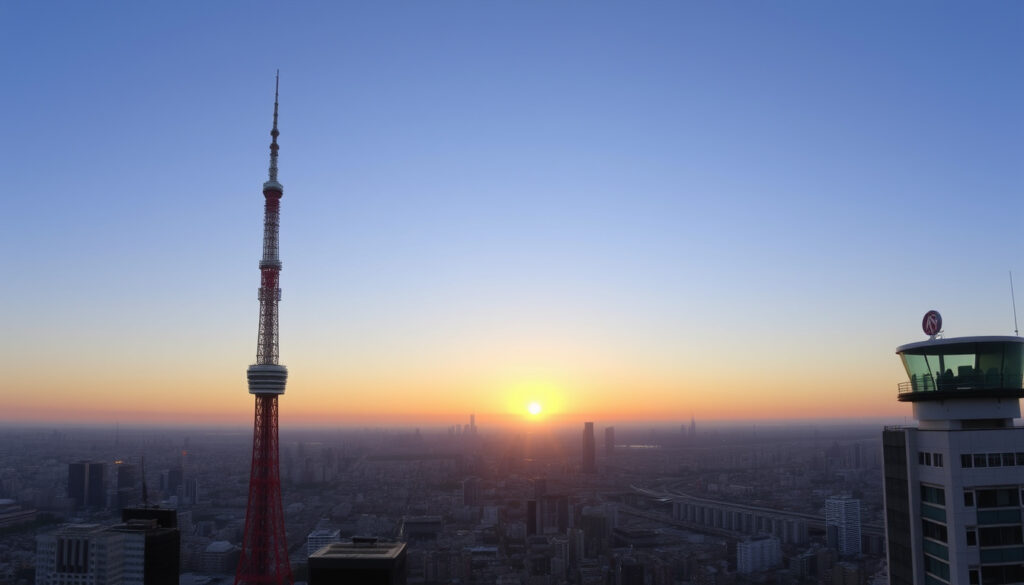
Tokyo Skytree: Worth It? Tickets, Views, Tips (2025 Guide)
There aren’t many places where you can stand 450 meters above a city and still feel the pulse of daily life below. Tokyo Skytree offers exactly that — a perspective on Tokyo that is both sweeping and intimate.
Height: 634 meters (2,080 ft) ·
Opened: 2012 ·
Observation decks: 350 m and 450 m ·
Tallest tower in Japan: Yes
Quick snapshot
- Tallest tower in Japan at 634 m (GO TOKYO (official city tourism site))
- Two observation decks at 350 m and 450 m (Japan Guide (trusted local travel resource))
- Opened in 2012 (Japan Guide)
- Mount Fuji visible on clear days (Travel Japan (national tourism organization))
- Exact visibility of Mount Fuji depends on weather and air quality (Travel Japan)
- Whether the upper deck is worth the extra cost depends on personal preferences (Erika’s Travel Ventures (independent travel blog))
- Construction began in 2008 (Wikipedia (online encyclopedia))
- Opened to the public in May 2012 (Japan Guide)
- Achieved Guinness World Record in 2014 for tallest tower (Wikipedia)
- Combo passes with other attractions available (Klook (travel booking platform))
- Online booking recommended to skip queues and save money (Truly Tokyo (Tokyo-focused guide))
- Sunset visits offer the most dramatic panoramic experience (Klook (travel booking platform))
Six key facts, one clear picture: Tokyo Skytree is a modern structure purposely built for height and panoramic reach.
| Height | 634 m (2,080 ft) (GO TOKYO) |
| Location | Sumida, Tokyo, Japan (Japan Guide) |
| Opened | May 22, 2012 (Wikipedia) |
| Observation floors | Tembo Deck (350 m), Tembo Galleria (450 m) (Japan Guide) |
| Entry fee (adult) | ¥2,100–¥3,100 (Japan Guide) |
| Hours | 9:00 am – 10:00 pm (last entry 9:00 pm) (GO TOKYO) |
Is it worth going up the Tokyo Skytree?
What to expect from the observation decks
Tokyo Skytree’s 634 meters offer the greatest elevation in the city, but reaching it costs more and takes longer than any other viewpoint.
The Tembo Deck at 350 meters spans three floors with 360-degree glass windows, offering a complete circuit of the city below (Japan Guide (trusted local travel resource)). The Tembo Galleria at 450 meters is reached by an enclosed spiral ramp that rises slowly, giving visitors a continuously widening perspective as they climb (Japan Guide). The upper deck also features a glass floor panel where you can look straight down — an adrenaline spike for some, a deterrent for others.
Because of its height, Skytree offers the widest possible sweep of Tokyo. On a clear day, the visible arc stretches from Shinjuku’s high-rises to Tokyo Bay, and, in winter, the outline of Mount Fuji appears on the western horizon (Travel Japan (national tourism organization)). The indoor environment means weather is rarely a barrier, though fog and rain obviously mute the view.
Ticket prices and value for money
- Advance ticket for both decks: ¥3,100 on weekdays, ¥3,400 on weekends (Japan Guide)
- Same-day ticket for both decks: ¥3,500 weekdays, ¥3,800 weekends (Japan Guide)
- Advance ticket first deck only (350 m): ¥2,100 weekdays, ¥2,300 weekends (Japan Guide)
- Online tickets through third-party platforms can offer a slight discount and shorter queue (Truly Tokyo (Tokyo-focused travel guide))
- Children and seniors qualify for significant discounts
The price gap between same-day and advance tickets is designed to push visitors toward online booking, which also helps manage crowd flow.
Comparing Skytree to other Tokyo viewpoints
- Tokyo Skytree: highest deck at 450 m, ticket ¥3,100+ (Japan Guide)
- Tokyo Tower: main deck at 250 m, ticket ¥1,200 (Wikipedia)
- Roppongi Hills: deck at 238 m, ticket ¥2,000 (Wikipedia)
Three observation towers, one metric for value: height-to-cost ratio tells a distinct story.
| Feature | Tokyo Skytree | Tokyo Tower | Roppongi Hills Mori Tower |
|---|---|---|---|
| Height | 634 m (deck at 350/450 m) | 333 m (deck at 250 m) | 238 m |
| Opened | 2012 | 1958 | 2003 |
| Adult ticket (main deck) | ¥2,100 – ¥3,100 | ¥1,200 | ¥2,000 |
| Fuji view | Excellent on clear days (Travel Japan) | Good (Wikipedia) | Good (Wikipedia) |
| Wait time | Moderate to high | Low | Low to moderate |
The implication for visitors: Skytree trades accessibility and a lower price point for sheer altitude and the highest probability of a Fuji sighting. If a classic Tokyo cityscape defines your visit, Tokyo Tower offers a stronger return for the yen spent. If you want the highest vantage and the broadest urban panorama, Skytree justifies the premium price.
What’s so special about Tokyo Skytree?
Design and architecture
- Inspired by traditional Japanese temples, the tower’s design incorporates a “sori” and “mukuri” curvature (Wikipedia)
- Built using a seismic damping system designed to withstand earthquakes (GO TOKYO (official city tourism site))
- The tower is illuminated nightly with two color themes: “Iki” (cool blue) and “Miyabi” (elegant purple) (GO TOKYO)
The design deliberately bridges old and new Japan. The cylindrical core and triangular steel frame echo traditional architectural proportions while using modern engineering to achieve record height. The result is a structure that feels both futuristic and rooted in heritage.
Broadcasting and cultural role
- Primary digital broadcast tower for the Kanto region since 2012 (Wikipedia)
- Height of 634 meters references the old province name “Musashi” (Wikipedia)
Tokyo Skytree replaced Tokyo Tower as the primary digital terrestrial broadcasting tower for the Kanto region. It broadcasts signals for NHK and the major commercial networks, freeing Tokyo Tower from the full load. Its height was carefully chosen: the numbers 6 (mu), 3 (sa), and 4 (shi) together evoke the historic Musashi Province, giving the tower a cultural name embedded in its dimensions.
The Tembo Galleria and other attractions
- Spiral skywalk ascending from 350 m to 450 m (Japan Guide)
- Glass floor panels allowing direct views to the ground
- Attached shopping center, aquarium, and planetarium
Beyond the decks, the Skytree complex — Tokyo Skytree Town — includes a shopping mall, the Sumida Aquarium, a planetarium, and several restaurants. The Tembo Galleria at the top is a spiraling skywalk that climbs the final 100 meters to the peak, offering a rare “walk upward” experience rather than a static viewing floor (Japan Guide). What this means: Skytree is not just a viewing platform but a functioning piece of urban infrastructure, wrapped in a design that references traditional culture and offers day-long entertainment beyond the elevator ride.
Can I see Mount Fuji from Tokyo Skytree?
Best conditions for viewing Mount Fuji
A clear winter morning is your best bet to see Mount Fuji, but without a reservation you risk a long wait for a view that might not materialize.
Mount Fuji is about 100 kilometers southwest of Tokyo. On a clear day, especially in winter when the air is dry and cold, the mountain is distinctly visible from the Skytree’s western-facing windows (Travel Japan (national tourism organization)). Early morning and late afternoon offer the best light and atmospheric clarity. The height of the tower, roughly two and a half times that of Tokyo Tower, significantly improves the odds of a Fuji sighting compared to lower viewpoints.
Alternative viewpoints in Tokyo
- Tokyo Tower (250 m) – ¥1,200 (Wikipedia)
- Roppongi Hills (238 m) – ¥2,000 (Wikipedia)
- Bunkyo Civic Center (free)
Each provides a reasonable Fuji sighting on clear days, but Skytree’s altitude translates to a wider viewing arc. However, Tokyo Tower and Roppongi Hills offer a more central location in the city, meaning less travel time from main districts like Shinjuku and Shibuya. For the determined, a day trip to Hakone or Fuji Five Lakes provides an immersive view, but that is a half-day commitment compared to the 10-second elevator ride at Skytree.
What to do if Mount Fuji is not visible
The Tokyo panorama itself is the primary experience; Fuji is the seasonal bonus.
The view of Tokyo alone is the real attraction. The city stretches out in every direction: the green sprawl of Ueno Park to the north, the neon clusters of Shinjuku and Shibuya to the west, the ribbon of the Sumida River below. On a clear afternoon or evening, the city’s vastness is the memorable image — Fuji becomes a bonus rather than a requirement. The indoor decks mean weather is less of a barrier than at open-air viewpoints like the Tokyo Tower’s rooftop.
The catch: Mount Fuji’s visibility is weather-dependent. Without it, the experience rests entirely on the urban panorama — which on a sunny day is still extraordinary, but lacks the single iconic anchor that draws many visitors up. Planning a winter visit with a flexible schedule gives you the best statistical chance.
How much time do I need at Tokyo Skytree?
Typical visit duration
- 1–2 hours for the observation decks themselves, including elevator wait times (Japan Guide)
- Adding the Tembo Galleria (the upper deck) adds roughly 30 minutes
- If you combine a meal at one of the tower restaurants, budget at least another hour
Total visit time including the shopping complex can easily stretch to 3–4 hours. A focused observation-deck visit can be done in 90 minutes if you arrive with an advance ticket and minimal queue, while a casual family afternoon could span half a day.
Activities within the Skytree complex
- Tokyo Skytree Town (300+ shops and restaurants)
- Sumida Aquarium (designed by Kengo Kuma)
- Konica Minolta Planetarium
Tokyo Skytree Town contains over 300 shops and restaurants, the Sumida Aquarium, and a Konica Minolta Planetarium. A visitor could easily spend a full afternoon here without leaving the complex. For families, the aquarium is a standout, housing penguins and jellyfish in a modern design by architect Kengo Kuma.
Best time of day to visit
- Sunset: 60–90 minutes before sunset for daylight + night views
- Weekdays: significantly less crowded than weekends
- Winter: clearest skies for Fuji visibility
Sunset is the consensus recommendation. Arriving 60 to 90 minutes before sunset allows you to experience the city in daylight, watch the transition to twilight through the golden hour, and then see the lights come on across Tokyo (Travel Japan). Weekdays are significantly less crowded than weekends, and going on a clear winter day maximizes both visibility and comfort (Truly Tokyo (Tokyo-focused travel guide)). Why this matters: A sunset visit bundles the city’s twilight transition into your timeframe, making the most of the ticket price with two views for the price of one.
Do you need tickets for Tokyo Skytree?
Where to buy tickets
- Official Tokyo Skytree website (advance booking)
- Third-party platforms such as Klook (travel booking platform)
- On-site ticket counters at the tower (same-day purchase)
The official site offers the best advance prices. Third-party platforms like Klook often bundle tickets with other attractions, such as the Sumida Aquarium or nearby experiences, providing added value for a full day out.
Ticket types and prices
- Same-day 350 m: ¥2,400 weekday, ¥2,600 weekend (Japan Guide)
- Same-day both decks: ¥3,500 weekday, ¥3,800 weekend (Japan Guide)
- Advance 350 m: ¥2,100 weekday (Japan Guide)
- Advance both decks: ¥3,100 weekday (Japan Guide)
The price gap between same-day and advance is designed to push visitors toward online booking, which also helps manage crowd flow. Children and seniors qualify for significant discounts.
Is advance booking necessary?
Advance booking saves roughly ¥400 per person and an average of 30 minutes in queue.
It is strongly recommended during weekends, holidays, and peak travel seasons. Advance tickets not only secure your entry — they save money and, in many cases, allow you to use a faster entry lane, bypassing the worst of the queue. For a weekday visit outside of school holidays, buying on-site is usually fine.
The trade-off: online booking trades flexibility for savings on time and money. If you buy at the door, you pay a premium and risk a longer wait.
Tokyo Skytree vs Other Tokyo Viewpoints
Three observation points, one pattern: height determines visual reach but not necessarily value for a given traveler. The price gap between Skytree and Tokyo Tower — roughly double — reflects a jump in altitude that can make or break the Fuji sighting.
| Feature | Tokyo Skytree | Tokyo Tower | Roppongi Hills Mori Tower |
|---|---|---|---|
| Height | 634 m (deck at 350/450 m) | 333 m (deck at 250 m) | 238 m |
| Opened | 2012 | 1958 | 2003 |
| Adult ticket (main deck) | ¥2,100 – ¥3,100 | ¥1,200 | ¥2,000 |
| Fuji view | Excellent on clear days (Travel Japan) | Good (Wikipedia) | Good (Wikipedia) |
| Wait time | Moderate to high | Low | Low to moderate |
| Location convenience | Sumida (eastern Tokyo) | Shiba Park (central) | Roppongi (central) |
The implication: for travelers visiting Tokyo for the first time, Skytree’s elevation advantage over Tokyo Tower is objectively significant, but the price difference means you’re paying a premium for extra vertical meters and a probabilistic Fuji view.
Tokyo Skytree Specifications
Six specifications capture the engineering behind the tower: each number reflects a deliberate design choice for broadcast efficiency, seismic resilience, and visitor experience.
| Height | 634 m (2,080 ft) | GO TOKYO |
| Floors | 29 (above ground) | Wikipedia |
| Construction material | Steel | Wikipedia |
| Architect | Nikken Sekkei | Wikipedia |
| Operator | Tobu Tower Skytree Co., Ltd. | GO TOKYO |
| Elevator speed | Up to 600 m/min (10 m/s) | Wikipedia |
The pattern: the specifications reveal a tower designed for both height and safety.
Pros and Cons of Visiting Tokyo Skytree
Upsides
- Highest observation deck in Japan at 450 m (Japan Guide)
- Clear-day views of Mount Fuji from the upper deck (Travel Japan)
- Modern architecture with traditional design references (GO TOKYO)
- Large attached complex with shopping, dining, and aquarium
- Seismic safety engineering for peace of mind
Downsides
- More expensive than Tokyo Tower and Roppongi Hills
- Located outside central Tokyo in Sumida, requiring a longer trip
- Can be very crowded at sunset and on weekends
- Upper deck (Tembo Galleria) adds significant cost vs. modest angle improvement
- Weather-dependent Fuji view can feel like a gamble
The balance of pros and cons suggests that the decision depends on the visitor’s priorities.
What’s Known vs. What’s Still Unclear
Confirmed facts
- Tokyo Skytree is 634 meters tall (GO TOKYO)
- It is the tallest tower in Japan (Wikipedia)
- Mount Fuji is visible on clear days, especially in winter (Travel Japan)
- Tickets can be purchased online or at the venue (Japan Guide)
What’s unclear
- Exact visibility of Mount Fuji depends on weather and air quality (Travel Japan)
- Whether the 450 m Galleria offers meaningfully different views from the 350 m Deck depends on visitor priorities (Erika’s Travel Ventures)
The distinction between confirmed and unclear helps visitors set realistic expectations.
What the Experts Say
“Tokyo Skytree is the tallest tower in Japan and offers panoramic views from 350 meters above ground.”
– GO TOKYO (official city tourism site)
“Tokyo Skytree is the tallest tower in Japan and the second tallest freestanding structure in the world.”
– Wikipedia (online encyclopedia)
“Japan’s tallest tower and the second tallest structure in the world.”
– Klook (travel booking platform)
For the traveler weighing time, cost, and view, the decision has a clear logic. If the goal is a single, landmark-defining panorama of Tokyo — ideally with Mount Fuji on the horizon — and the willingness to pay for altitude is there, Tokyo Skytree delivers. The alternative, Tokyo Tower, offers a classic silhouette and a lower price tag but half the height. The choice is not about right or wrong; it’s about what kind of view you’re chasing. For a visitor to Tokyo, prioritizing Skytree over its older counterpart is a decision that trades intimacy for expanse — a trade-off perfectly matched to the city’s scale.
Related reading: For similar landmark insights, see our guide on Mount Everest: Location, Height, Cost, Deaths, and Key Facts. For travel planning, see our review of Lufthansa Airlines: Is It a Good Airline? Review & Facts.
getyourguide.com, aglobewelltravelled.com, reddit.com, youtube.com, tripadvisor.com
For a detailed breakdown of ticket prices and viewing tips, check out Canadian Reviews Tokyo Skytree guide.
Frequently asked questions
Is Tokyo Skytree the tallest tower in the world?
Yes, Tokyo Skytree is the tallest tower in the world at 634 meters. It is also the second tallest freestanding structure behind the Burj Khalifa in Dubai, which is classified as a building rather than a tower (Wikipedia).
Is Mount Fuji worth a day trip from Tokyo?
For an immersive experience, a day trip to Hakone or Fuji Five Lakes is excellent. Within the scope of a Skytree visit, seeing Fuji from the deck is a zero-commitment alternative that requires only a clear day and an elevator ride (Travel Japan).
What is the height of Tokyo Skytree?
Tokyo Skytree stands at exactly 634 meters (2,080 feet) (GO TOKYO).
How do I get to Tokyo Skytree?
The tower is directly connected to Oshiage Station on the Tobu Skytree Line. It is also a short walk or bus ride from Asakusa Station, served by the Tokyo Metro Ginza Line and Toei Asakusa Line (Japan Guide).
What restaurants are at Tokyo Skytree?
Tokyo Skytree Town contains dozens of dining options, from fast food to fine dining. The tower itself houses restaurants on the lower levels and limited café options on the observation decks (Japan Guide).
Is Tokyo Skytree better than Tokyo Tower?
“Better” depends on priority. Skytree is taller, newer, has higher observation decks, and offers the best chance of seeing Mount Fuji. Tokyo Tower is cheaper, closer to central Tokyo, and carries a longer cultural history. For panoramic height, choose Skytree; for classic Tokyo atmosphere and a lower cost, choose Tokyo Tower.
Can I see Tokyo Skytree from other parts of the city?
Yes, the tower is visible from many points in eastern Tokyo, particularly Asakusa, Ueno, and across the Sumida River. At night, its illuminated silhouette is a distinctive part of the city skyline (GO TOKYO).
These FAQs address the most common questions about Tokyo Skytree.
More related posts
 Claudia Cardinale: Biography, Height, Most Famous Role & Death
 Grace Kelly: The Truth Behind Her Death and Marriage
 Chemist Warehouse Mayfield: Hours, Phone, Products & Savings
 Free Tram Zone Melbourne: Map, Rules & Stops Guide
 St John Ambulance – Services, Training & Coverage by State
 Jemima Goldsmith: Biography, Marriages, and Net Worth
 Keith Wolahan: Nationality, Career, Military Service, Loss
 Life Insurance in Ireland: Costs, Types & How to Choose
