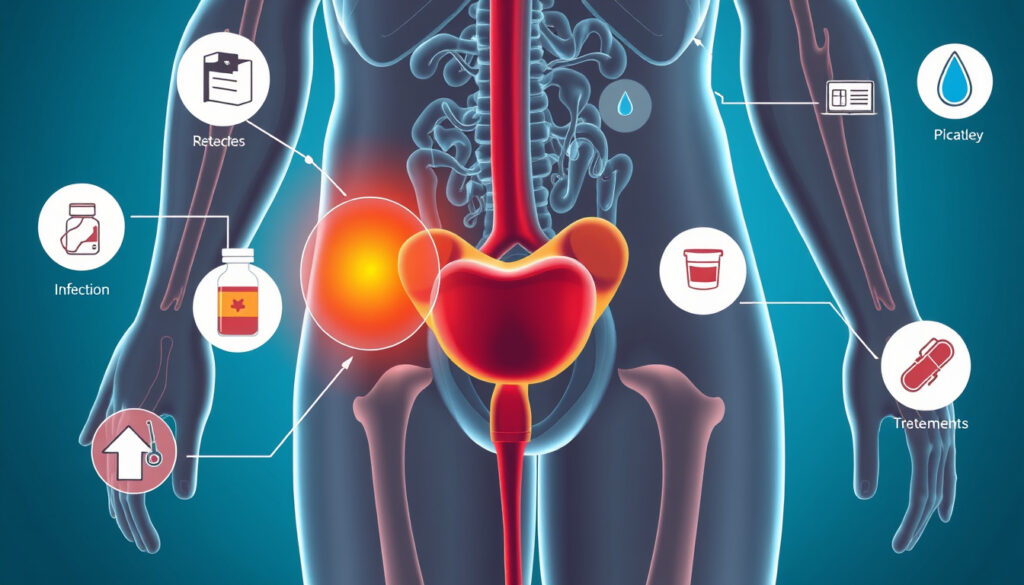
Bladder Infection: Symptoms, Causes, Treatment & Prevention
Anyone who has felt that sudden, urgent need to urinate paired with a burning sting knows how disruptive a bladder infection can be. This guide lays out the five warning signs, the main causes, and the most effective treatments — backed by the latest evidence from the CDC and the National Institute of Diabetes and Digestive and Kidney Diseases. You’ll also learn how to tell a bladder infection apart from other conditions that mimic it, so you can get the right care faster.
Annual US bladder infection cases (women): over 4 million ·
Common causative bacteria: Escherichia coli (E. coli) in 80–90% of cases ·
Lifetime risk for women: at least 1 in 2 ·
Typical treatment duration: 3 to 7 days of antibiotics
Quick snapshot
- Pain or burning when urinating (CDC (national public health agency))
- Frequent, urgent need to urinate (CDC)
- Cloudy, dark, or bloody urine (NIDDK (National Institute of Diabetes and Digestive and Kidney Diseases))
- Pelvic pain or pressure (CDC)
- Bacteria (often E. coli) entering the bladder (NIDDK)
- Short urethra in women (CDC clinical overview)
- Sexual activity (CDC)
- Catheter use (CDC)
- Antibiotic course (3–7 days) (NIDDK)
- Increased water intake (NIDDK)
- OTC pain relief (phenazopyridine) (NCBI Bookshelf (medical literature database))
- Heating pad for discomfort (NHS (UK national health service))
- Urinate after sexual activity (CDC)
- Wipe front to back (Office on Women’s Health (U.S. government health resource))
- Stay hydrated (NIDDK)
- Cranberry products (prevention only) (NCBI Bookshelf)
Five key facts about bladder infections, one pattern: most cases are caused by a single bacterium and treated with a short course of antibiotics.
| Label | Value |
|---|---|
| Medical term | Cystitis |
| Most common bacteria | Escherichia coli (80–90%) (NCBI Bookshelf) |
| Annual US cases (women) | Over 4 million (NIDDK) |
| Typical antibiotic course | 3–7 days (NIDDK) |
| Key diagnostic test | Urine culture (MedlinePlus (trusted health information resource)) |
What are the 5 warning signs of a bladder infection?
Pain or burning during urination
- Dysuria (painful urination) is the most common symptom, reported in nearly all cases of acute cystitis (NCBI Bookshelf).
- The CDC lists pain or burning while urinating as a primary symptom (CDC).
Frequent urge to urinate with little output
- Urinary urgency and frequency are hallmark signs of bladder infection (CDC clinical overview).
- The feeling of needing to urinate despite an empty bladder is a classic red flag (CDC).
Cloudy or strong-smelling urine
- Cloudy or foul-smelling urine indicates bacterial presence (NIDDK).
- Bloody urine (hematuria) may be visible or microscopic (NCBI Bookshelf).
Pelvic or lower abdominal pressure
- Pressure or cramping in the groin or lower abdomen is a common symptom (CDC).
- Suprapubic pain or tenderness is often present in uncomplicated cystitis (NCBI Bookshelf).
Blood in the urine
- Hematuria may be visible or detected only on a urine test (NCBI Bookshelf).
- Bloody urine should always be evaluated by a healthcare professional (NIDDK).
Women with dysuria and frequency — and no vaginal discharge or irritation — have a greater than 90% probability of cystitis (NCBI Bookshelf). That means these five symptoms alone are often enough for a doctor to start treatment.
The implication: early recognition of these signs can prevent progression to a kidney infection.
What is the main cause of bladder infection?
How bacteria reach the bladder
- Bacteria from the gastrointestinal tract, primarily Escherichia coli, enter the urethra and travel up to the bladder (NIDDK).
- This ascending infection is the most common route (CDC clinical overview).
- Rarely, yeast or other pathogens can cause a bladder infection (Office on Women’s Health).
Risk factors for bladder infections
- Women have a higher risk because of a shorter urethra (CDC).
- Sexual activity, use of spermicides, and menopause alter vaginal bacteria and raise UTI risk (CDC).
- Pregnancy, catheter use, and structural urinary tract problems (e.g., enlarged prostate) also increase risk (CDC).
- A prior UTI is a strong risk factor for another one (CDC).
Many risk factors are modifiable (hygiene, hydration, sexual practices), but some are not (anatomy, menopause). The pattern: women who experience recurrent infections often have no single identifiable cause, making prevention a guessing game.
What this means: even when risk factors are minimized, the unpredictable nature of recurrence underscores the need for prompt treatment.
How do I know if my bladder has an infection?
Self-assessment of symptoms
- Presence of key symptoms like dysuria, frequency, and urgency strongly suggests a bladder infection (NCBI Bookshelf).
- Home test strips can detect nitrites and leukocytes in urine, but they are not definitive (MedlinePlus).
When to see a doctor
- Medical diagnosis requires a urine culture to confirm the presence of bacteria (MedlinePlus).
- Fever, back pain, or flank pain may indicate a kidney infection (pyelonephritis) and require immediate care (NCBI Bookshelf).
- Uncomplicated cystitis typically does not cause fever or chills (NCBI Bookshelf).
A simple urine test at a clinic or urgent care can confirm a bladder infection in minutes. The cost of waiting: untreated infections can ascend to the kidneys, turning a 3-day antibiotic course into a hospital stay.
The pattern: self-assessment is useful, but only a lab test can rule out upper-tract involvement.
What is the difference between a UTI and a bladder infection?
Understanding urinary tract anatomy
- A urinary tract infection (UTI) is an umbrella term for infections anywhere in the urinary system (CDC clinical overview).
- The bladder is the most common site of a UTI (NIDDK).
Cystitis vs. other UTI types
- A bladder infection (cystitis) is a type of UTI confined to the bladder (CDC clinical overview).
- UTI can also affect the urethra (urethritis), the ureters, or the kidneys (pyelonephritis) (NIDDK).
- Symptoms vary by location: urethritis causes discharge, pyelonephritis causes fever and flank pain (NCBI Bookshelf).
Three UTI types, one pattern: the higher the infection ascends, the more systemic the symptoms become.
| Condition | Location | Key symptoms | Common treatment |
|---|---|---|---|
| Cystitis (bladder infection) | Bladder | Dysuria, frequency, urgency, suprapubic pain | Oral antibiotics 3–7 days |
| Urethritis | Urethra | Discharge, burning with urination | Antibiotics (target organism) |
| Pyelonephritis (kidney infection) | Kidney | Fever, chills, flank pain, nausea | IV or oral antibiotics 7–14 days |
The catch: location determines both the risk and the treatment intensity.
What can be mistaken for a bladder infection?
Conditions with similar symptoms
- Vaginal yeast infections can cause burning and irritation but usually include discharge and itching (Office on Women’s Health).
- Sexually transmitted infections (chlamydia, gonorrhea) may cause dysuria and discharge (CDC).
- Interstitial cystitis (bladder pain syndrome) causes chronic pelvic pain without bacteria (NIDDK).
- Kidney stones can cause pain and blood in urine but usually lack the burning sensation of infection (NCBI Bookshelf).
How doctors differentiate
- Urinalysis and culture are key for accurate diagnosis (MedlinePlus).
- Presence of nitrites, leukocyte esterase, and bacteria on microscopy strongly suggests infection (NCBI Bookshelf).
- If no bacteria are found, alternative diagnoses like interstitial cystitis are considered (NIDDK).
The implication: misdiagnosis is common; lab confirmation prevents both overtreatment and missed alternative conditions.
What is the fastest way to get rid of a bladder infection naturally?
- Recognize the key symptoms: dysuria, frequency, urgency, cloudy urine, pelvic pressure.
- Use a home test strip to check for nitrites and leukocytes, but do not rely on it alone.
- See a healthcare provider for a urine culture to confirm bacterial infection.
- Start antibiotics as prescribed; complete the full course even if symptoms improve.
Medical treatment: antibiotics
- Antibiotics are the only cure for bacterial bladder infections (NIDDK).
- Common antibiotics include nitrofurantoin, trimethoprim-sulfamethoxazole, and fosfomycin (NCBI Bookshelf).
- Most uncomplicated cases resolve within 3 days of treatment; complicated cases may require 7 days or more (NIDDK).
Four common antibiotics for uncomplicated cystitis, one pattern: all require a prescription, and resistance rates vary by region.
| Antibiotic | Typical dose | Duration | Notes |
|---|---|---|---|
| Nitrofurantoin | 100 mg twice daily | 5 days | Well tolerated; avoid if CrCl < 30 |
| Trimethoprim-sulfamethoxazole | 160/800 mg twice daily | 3 days | Resistance rates > 20% in some areas |
| Fosfomycin trometamol | 3 g single dose | 1 day | Convenient but less effective for complicated UTIs |
| Cephalexin | 500 mg twice daily | 7 days | Alternative for patients with allergies |
Home remedies and symptom management
- Drinking more water can speed recovery and ease symptoms (NIDDK).
- Using a heating pad on the lower abdomen may relieve discomfort (NHS (UK national health service)).
- Over-the-counter phenazopyridine (Pyridium) can numb the urinary tract but does not treat the infection (NCBI Bookshelf).
- Cranberry products may help prevent UTIs but do not treat active infections (NCBI Bookshelf).
Home remedies can make you feel better, but they won’t kill the bacteria. For a fast cure, antibiotics are the only proven path. The catch: delaying treatment while trying home remedies can allow the infection to spread.
What is the fastest way to cure a bladder infection?
See the treatment section above. The fastest cure is a prescribed antibiotic, preferably one to which the local bacteria are susceptible. For most women with uncomplicated cystitis, a 3-day course of nitrofurantoin or trimethoprim-sulfamethoxazole is effective. Fosfomycin offers a single-dose option. Always finish the full course.
Confirmed facts
- Bacteria cause the vast majority of bladder infections (NIDDK)
- Antibiotics are the standard effective treatment (NIDDK)
What’s unclear
- The exact role of cranberry products in prevention is still under study (NCBI Bookshelf)
- Why some individuals experience recurrent infections without clear risk factors (CDC)
- Symptoms like dysuria, frequency, urgency, and cloudy urine are typical but may overlap with other conditions (CDC)
“Bladder infections are most often treated with antibiotics. Drinking more liquids can speed recovery and ease symptoms.”
— NIDDK (National Institute of Diabetes and Digestive and Kidney Diseases)
“Pain or burning while urinating, frequent urination, feeling the need to urinate despite an empty bladder, bloody urine, and pressure or cramping in the groin or lower abdomen are all symptoms of a bladder infection.”
— CDC (Centers for Disease Control and Prevention)
“Uncomplicated cystitis commonly presents with dysuria, urinary frequency, urgency, suprapubic pain or tenderness, and occasionally hematuria.”
— NCBI Bookshelf (medical literature database)
A bladder infection is a common, treatable condition — but it is also one that can escalate quickly if ignored. For women, who face a lifetime risk of at least 1 in 2, the takeaway is straightforward: recognize the five warning signs, get a urine test, and start antibiotics promptly. For men, though less common, symptoms should never be dismissed because underlying prostate issues may be involved. The choice is clear: treat early with evidence-based medicine, or risk a more serious kidney infection that could require hospitalization.
va.gov, ncbi.nlm.nih.gov, dphhs.mt.gov, pmc.ncbi.nlm.nih.gov, ncbi.nlm.nih.gov, ncbi.nlm.nih.gov, niddk.nih.gov
Bladder infections are a common type of UTI, and understanding urinary tract infection symptoms can help distinguish between lower and upper urinary tract issues.
Frequently asked questions
Can a bladder infection go away on its own?
Some mild bladder infections may resolve without treatment, but this is uncommon. The risk of progression to a kidney infection makes it safer to seek medical care (NIDDK).
How long does a bladder infection last with treatment?
With appropriate antibiotics, symptoms often improve within 24–48 hours, and the infection is usually cured after 3–7 days of treatment (NIDDK).
Is a bladder infection more common in men or women?
Bladder infections are far more common in women. At least 1 in 2 women will have a UTI in their lifetime, while the lifetime risk for men is much lower (about 1 in 10) (CDC).
What happens if a bladder infection is left untreated?
Untreated bladder infections can ascend to the kidneys, causing pyelonephritis – a serious infection that may require hospitalization and intravenous antibiotics (NCBI Bookshelf).
Can you get a bladder infection from holding your urine?
Holding urine for long periods may increase the risk by allowing bacteria to multiply in the bladder, but it is not a direct cause. The main risk factor is bacterial entry through the urethra (CDC).
Does cranberry juice help with a bladder infection?
Cranberry products may help prevent UTIs by preventing bacteria from adhering to the bladder wall, but they do not treat an active infection. Antibiotics remain the only proven cure (NCBI Bookshelf).
What antibiotics treat a bladder infection?
Common antibiotics include nitrofurantoin, trimethoprim-sulfamethoxazole, fosfomycin, and cephalexin. The choice depends on local resistance patterns and patient allergies (NCBI Bookshelf).
Can sexual activity cause a bladder infection?
Yes, sexual activity is a well-established risk factor for UTIs, especially in women. The mechanical action can push bacteria from the urethra into the bladder. Urinating after intercourse may reduce the risk (CDC).
More related posts
 Myf Warhurst: Biography, Children, Partner, and Latest News
 Pierce Brosnan: Biography, James Bond, Family & More
 Gary Burghoff: Life After M*A*S*H as Painter and Inventor
 Aamir Khan: Biography, Age, Family, Movies, Marriages & Net Worth
 How to Buy Bitcoin: Step-by-Step for Beginners (2024)
 Uranium Spot Price Today – Live Chart & Market Update
 Alastair Clarkson: Playing Career, Premierships & Family
 Vincent Cassel Relationships: Marriages, Children, and Movies
