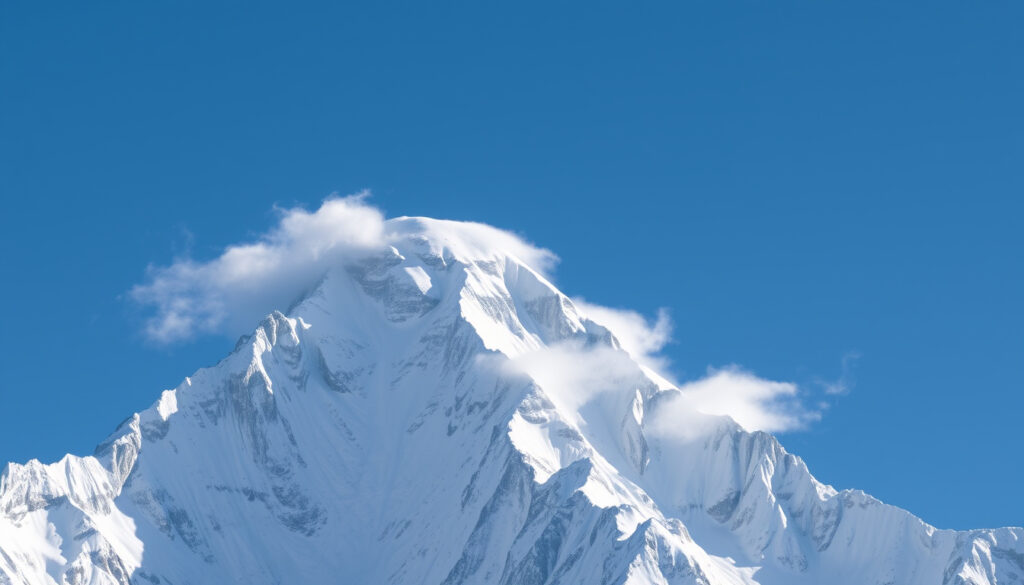
Mount Everest Peak: Height, Climbing Difficulty, Deaths, FAQs
Few landmarks on Earth pull at the imagination quite like the Mount Everest peak. You probably know it as the world’s highest point, but the real story is messier — a mix of record-breaking statistics, real danger, and a climbing scene that has changed dramatically in the last 30 years.
Height: 8,848.86 m (29,031.7 ft) ·
First Ascent: May 29, 1953 by Edmund Hillary and Tenzing Norgay ·
Deaths per year: Average 5–10 in recent years (2023: 12) ·
Climbing season: April to May ·
Permit cost (Nepal side): $11,000 per person
Quick snapshot
- Height is 8,848.86 m (Encyclopaedia Britannica)
- Location on Nepal/China border (Encyclopaedia Britannica)
- First ascent in 1953 (Encyclopaedia Britannica)
- Exact number of bodies remaining on Everest
- Effect of climate change on future climbing conditions
- Cause of some individual deaths
- 1953: first ascent by Hillary and Norgay (Encyclopaedia Britannica)
- 2020: height remeasured to 8,848.86 m (Reuters)
- Death rate stayed near 1% since 1990 (University of Washington)
- Record permit numbers expected in 2026 (Harvard Gazette)
- Mortality has declined from 1.4% to 0.7% (Harvard Gazette)
- Summit success rates have doubled (University of Washington)
Six key facts, one pattern: the mountain’s profile is well-documented but the human toll keeps shifting.
The data table below captures the mountain’s core metrics at a glance.
| Attribute | Value |
|---|---|
| Height (2020 measurement) | 8,848.86 m (29,031.7 ft) |
| First ascent | May 29, 1953 by Edmund Hillary and Tenzing Norgay |
| First solo ascent | 1980 by Reinhold Messner |
| First woman | 1975 by Junko Tabei |
| Location | Border of Nepal (Sagarmatha Zone) and Tibet (China) |
| Climbing window | Late April to early May |
What is the peak of Mount Everest?
What is the height of Mount Everest?
- The official height of Mount Everest is 8,848.86 meters (29,031.7 feet), based on a 2020 joint measurement by China and Nepal (Encyclopaedia Britannica).
- Both governments announced the updated figure in December 2020, ending a long-standing debate between the two countries (Reuters).
Where is Mount Everest located?
- Mount Everest sits on the border of Nepal (Sagarmatha Zone) and Tibet, China (Encyclopaedia Britannica).
- Locally, it is known as Sagarmatha in Nepali and Chomolungma in Tibetan.
What continent is Mount Everest in?
- Mount Everest is in Asia, specifically in the Mahalangur Himal sub-range of the Himalayas (Encyclopaedia Britannica).
- The mountain straddles the border between Nepal and China, both Asian nations.
The implication: The Everest peak is as much a political and cultural marker as a physical one — its borders, names, and even height have been subjects of diplomatic negotiation.
How many climbers died on Everest per year?
How many climbers have died on Everest in total?
- As of 2019, just over 280 total deaths had been recorded on Mount Everest (BBC News).
- The south side (Nepal) has seen 229 deaths out of 9,887 summits, while the north side (Tibet) has seen 110 deaths out of 3,850 summits (Alan Arnette (mountaineering analyst)).
What are the most common causes of death on Everest?
- Most deaths occur in the “death zone” above 8,000 meters, especially during descent from the summit (PMC (medical research)).
- A 2007 study found that the death rate among climbers descending from the summit was 2.35%, nearly twice that of those who did not summit (PMC (medical research)).
- Leading causes include altitude sickness, falls, avalanches, and exhaustion (BBC News).
- 2023 saw 12 deaths in a single season, tying past records for deadliest years.
The pattern: Despite higher success rates, the death zone remains the most consistent killer — the descent is where fatigue and oxygen depletion combine.
Everest is safer than it was a century ago — mortality above base camp fell from 1.4% (1921-2006) to 0.7% (2007-2024) — yet almost one in 100 attempts still ends in death (Harvard Gazette).
How hard is Everest to actually climb?
What are the physical and mental challenges of climbing Everest?
- Climbers must undergo extreme altitude acclimatization over weeks, with oxygen supplementation typical above 8,000 meters (Adventure Consultants (expedition operator)).
- The weather window is narrow — typically late April to early May — and missed opportunities mean waiting another year (Encyclopaedia Britannica).
- Technical climbing involves ice faces, rock sections, and the Khumbu Icefall, which moves constantly (Adventure Consultants (expedition operator)).
What is the death zone?
- The death zone refers to altitudes above 8,000 meters, where the human body deteriorates rapidly due to oxygen deprivation (PMC (medical research)).
- Most Everest fatalities occur in this zone, with the descent being particularly dangerous due to exhaustion and cognitive impairment (PMC (medical research)).
The trade-off: Modern gear and guided expeditions make the climb accessible, but the death zone doesn’t care about experience — physical limits are absolute.
How long does it take to climb the peak of Mount Everest?
What is the typical climbing schedule?
- A full Everest expedition typically lasts 45 to 60 days, including trek to Base Camp, acclimatization rotations, and waiting for the weather window (Adventure Consultants (expedition operator)).
- Acclimatization involves climbing to higher camps and returning to Base Camp to rest over multiple weeks (Encyclopaedia Britannica).
How long is the summit night?
- The summit push from Camp IV (7,950 m) to the top takes 12 to 18 hours, with most climbers starting around midnight to return before afternoon storms (Adventure Consultants (expedition operator)).
- The descent to Camp IV takes another 4 to 6 hours, meaning 16 to 24 hours of continuous effort on summit day.
What this means: Six weeks of preparation, three summit attempts before the real one, and roughly 20 hours of pure push for the final meters. The ratio of preparation to summit time is extreme.
Why do planes not fly over Everest?
Can you fly over Everest?
- Commercial jets typically fly at 30,000 to 40,000 feet, while Everest’s peak sits at 29,032 feet — too close for safe margin in case of decompression or turbulence (Encyclopaedia Britannica).
- Strong jet streams over the Himalayas create severe turbulence that makes the airspace hazardous for passenger aircraft.
What are the jet streams?
- The jet stream over Everest can reach speeds of 150 mph or more, creating extreme wind shear and dangerous flying conditions (Encyclopaedia Britannica).
- Rare military or specialized flights do occur, but no commercial airline routes pass directly over the summit.
The catch: It’s not that planes can’t fly over Everest — it’s that the risks (no emergency landing options, severe turbulence) make it operationally unsound for passenger flights.
What is the oldest body still on Everest?
Who is Green Boots?
- “Green Boots” is the nickname given to an unidentified body that served as a landmark at 8,500 meters for decades, believed to be Tsewang Paljor who died during the 1996 disaster (BBC News).
- The body was reportedly moved in recent years, but remains a symbol of the many who never came home.
How many bodies are on Everest?
- Over 200 bodies remain on Everest, most of them in the death zone where recovery is logistically near-impossible (BBC News).
- Some bodies double as grim landmarks for subsequent expeditions, a stark reminder of the mountain’s cost.
The pattern: The oldest bodies are also the most visible — they mark the route like signposts, but the message is about risk, not progress.
For climbers, the 200+ bodies on Everest are not just historical artifacts — they represent real-time hazards. Rescue above 8,000 meters is rare, and recovery virtually unheard of. The decision to continue past a fallen climber is one every summit hopeful must face.
“It is not the mountain we conquer but ourselves.”
— Sir Edmund Hillary, reflecting on the meaning of the first ascent
“The physical demands of Everest are unlike anything else on Earth. You are pushing your body to the absolute limit of human tolerance.”
— Adventure Consultants (expedition operator), on the physical toll of the climb
“The number of permits issued for 2026 is expected to set a new record, raising questions about overcrowding and safety.”
— BBC News, on the growing commercial climbing industry
What is the best time to climb Mount Everest?
The climbing window is late April to early May, when the jet stream moves north and winds drop. Most expeditions target the first half of May.
How much does it cost to climb Mount Everest?
Permits on the Nepal side cost $11,000 per person. Total expedition costs typically range from $35,000 to $100,000 depending on the operator and services.
Do I need oxygen to climb Mount Everest?
Most climbers use supplemental oxygen above 8,000 meters. While a few elite mountaineers have summitted without it, the vast majority rely on bottled oxygen (Adventure Consultants (expedition operator)).
What is the success rate of climbing Mount Everest?
Summit success rates have doubled in recent decades to around 60% of those who attempt the climb from Base Camp (University of Washington).
Can I climb Mount Everest without experience?
Not safely. Most fatalities involve climbers with limited high-altitude experience. Operators require previous 6,000 m and 7,000 m peaks (Adventure Consultants (expedition operator)).
What permits are required to climb Everest?
Climbers need a permit from the Nepal government ($11,000) or China/Tibet authorities, plus a climbing guide and insurance covering medical evacuation.
How many people summit Everest each year?
In recent years, 600 to 800 climbers reach the summit annually, with 2023 seeing record numbers of permits issued.
pmc.ncbi.nlm.nih.gov, medicalxpress.com, en.wikipedia.org, globalsummitguide.com, globalsummitguide.com, en.wikipedia.org, pmc.ncbi.nlm.nih.gov
The details in this article are complemented by a complete Mount Everest guide that covers everything from height to death toll.
More related posts
 State of Origin 2025 Game 1: NSW Blues Beat Maroons 18-6
 Roger Waters: Pink Floyd Exit, Wealth & Politics
 Dafne Keen: Age, Relationships, Biography, and Upcoming Projects
 Hillarys Medical Centre: Appointments, Services, Reviews
 Madylin Sweeten Now: Life After Everybody Loves Raymond
 Tippi Hedren: Biography, Hitchcock Films, Big Cats
 Glen Campbell: Biography, Family Feud, Alzheimer’s & Death
 Magill Family Practice – Hours, Fees, Services and Booking Guide
