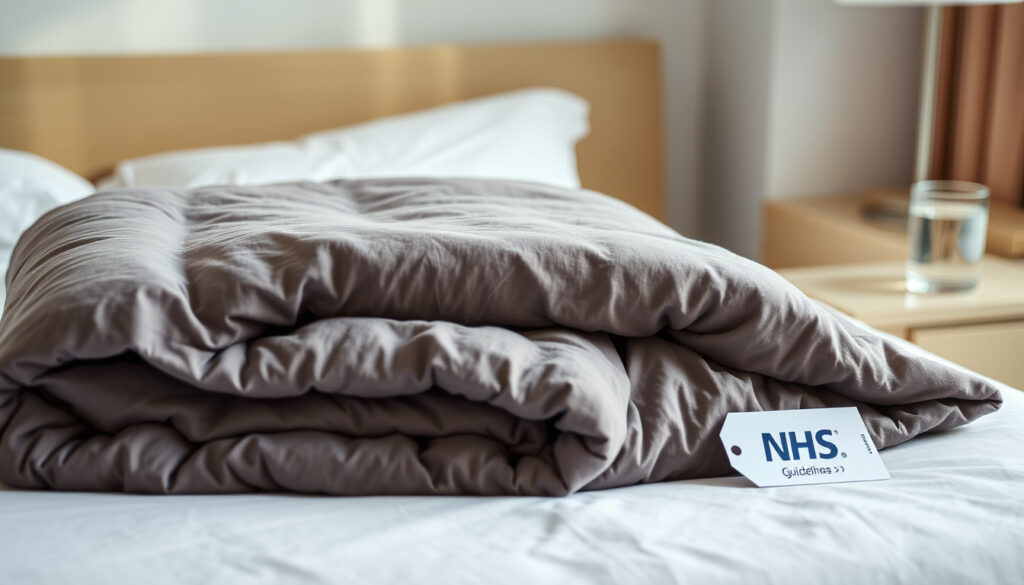
Weighted Blanket: Benefits, Safety & NHS Guidelines
If you’ve ever pulled a heavier duvet over yourself and felt instantly calmer, you’re not imagining it—the science behind weighted blankets suggests that extra weight can genuinely help you relax. The NHS recommends a blanket weight of about 10% of your body weight, and multiple NHS trusts have issued detailed safety guidelines for both children and adults. This guide walks through the evidence, the safety rules, and the buying considerations for Irish consumers, so you can decide if a weighted blanket is right for you.
Recommended weight percentage: 10% of body weight ·
Typical weight range: 4–12 kg (9–25 lbs) ·
Common uses: Anxiety, autism, ADHD, insomnia, chronic pain ·
NHS age guideline: Not recommended for children under 3 years
Quick snapshot
- Deep pressure stimulation (NHS Borders)
- Calms nervous system (NHS Borders)
- Increases serotonin and melatonin (NHS Borders)
- Anxiety relief
- Better sleep
- Autism and ADHD support
- Chronic pain management
- 10% of body weight rule (West Suffolk NHS)
- Not for children under 3 (West Suffolk NHS)
- Consult doctor for medical conditions (West Suffolk NHS)
- Emma Sleep
- JYSK
- Holland & Barrett
- Dunnes Stores (check availability)
Four key facts summarise the essentials — one pattern: the weight recommendation is consistently 10% of body weight across NHS trusts, yet the advice on overnight use varies.
| Label | Value |
|---|---|
| Recommended weight | 10% of body weight |
| Common fill materials | Glass beads, plastic pellets, steel shot |
| Age restriction (NHS) | Not for children under 3 years |
| Typical price range (Ireland) | €60 – €200 |
What does a weighted blanket actually do?
How deep pressure stimulation works
Weighted blankets work through a mechanism called deep pressure stimulation (DPS). The gentle, even weight across your body triggers a calming response in the nervous system, similar to the feeling of a firm hug. The NHS Borders (Scottish health authority) explains that the weight should usually be no more than 10% of the person’s weight to be effective without causing discomfort.
Effects on the nervous system
DPS is thought to increase the production of serotonin and melatonin, two neurotransmitters that regulate mood and sleep, while reducing cortisol, the stress hormone. A review from the West Suffolk NHS Foundation Trust (NHS trust) notes that the blanket should be as light as possible and no more than 10% of the person’s weight, and that the person should be supervised during use.
Scientific evidence for sleep improvement
Some studies have shown improved sleep quality for certain populations, including people with insomnia and anxiety. However, the Derbyshire Healthcare NHS Foundation Trust (mental health trust) advises that weighted items should not be used while the child is in bed and should not be used overnight, highlighting a tension between consumer marketing and clinical caution.
Weighted blankets can improve sleep for some, but NHS trusts disagree on overnight use. The West Suffolk trust recommends a maximum of 20 minutes, while other trusts allow all-night use if the weight is appropriate and the blanket is positioned safely.
The pattern: the scientific evidence is strongest for short-term relaxation, not for all-night therapeutic sleep.
What are the benefits of a weighted blanket?
Anxiety and stress relief
Many users report feeling calmer within minutes of using a weighted blanket. The Independent Living Centre (UK disability advice charity) recommends short sessions of up to 30 minutes rather than overnight use, and notes that the blanket should cover only the body, never the head or neck.
Autism and ADHD support
Weighted blankets are widely used in occupational therapy for children with autism and ADHD. The University Hospitals Derby and Burton NHS Foundation Trust (acute trust) states that weighted equipment is designed for short periods during the day, not all day or for several hours, and should never cover children’s faces or be left on overnight.
Chronic pain and osteoarthritis
Anecdotal evidence suggests that the extra weight can provide comfort for people with chronic pain, though research is limited. The Derbyshire Healthcare NHS Foundation Trust reiterates that weighted blankets should never be used as a restraint.
Insomnia and sleep quality
For adults who choose an appropriate weight, sleeping with a weighted blanket can improve sleep depth and reduce nighttime awakenings. The NHS Borders guidance adds that if a weighted blanket is used at night, it should not hang over the bed sides and should be removed when the child or young person is asleep.
The benefits are real for many, but clinical guidance is more cautious than marketing suggests. Irish consumers should weigh anecdotal relief against the safety warnings from NHS trusts, especially for children.
The pattern: benefits are strongest for anxiety and sensory needs, but the evidence base is still developing. For chronic pain and insomnia, the lack of large-scale studies means that individual trial-and-error is the norm.
Is it safe to sleep with a weighted blanket every night?
General safety guidelines
For healthy adults, sleeping with a weighted blanket every night is generally considered safe if the weight is appropriate—typically 10% of body weight. The West Suffolk NHS Foundation Trust advises that the blanket should not hang over the sides of the bed and the head and neck should not be covered. The University Hospitals Derby and Burton adds that weighted blankets should never cover children’s faces due to suffocation risk.
Recommended usage duration
There is no universal agreement on how long to use a weighted blanket. The Derbyshire Healthcare NHS Foundation Trust recommends that weighted items should not be used overnight, while the Independent Living Centre suggests short sessions up to 30 minutes. The NHS Borders guidance allows overnight use but with strict positioning rules.
Weight selection guidelines
All NHS trusts agree on the 10% rule. The Derbyshire Healthcare guidance adds 1 lb (0.45 kg) to the child’s weight for the blanket weight. For adults, the formula is simple: multiply your body weight by 0.1. If you weigh 70 kg, a 7 kg blanket is ideal.
The implication: nightly use is safe for adults who follow the 10% rule and ensure proper positioning, but children should not use weighted blankets overnight without professional guidance.
What are the negatives of a weighted blanket?
Potential discomfort and overheating
Weighted blankets are often filled with glass beads or plastic pellets, which can trap heat. In Ireland’s mild climate, overheating is less of a concern, but during summer months some users find them too warm. The Independent Living Centre advises that people with temperature-regulation vulnerabilities should avoid weighted blankets.
Risk of injury for improper use
The most serious risk is suffocation, especially for infants, young children, and people with mobility issues. The University Hospitals Derby and Burton warns that weighted blankets should never cover children’s faces and should not be left on children overnight. The NHS Borders adds that the user should be able to remove the blanket independently or be supervised.
Cost and maintenance
Weighted blankets are more expensive than regular duvets, typically €60–€200 in Ireland. They are also heavy to wash—most require professional cleaning or a large-capacity machine. Some contain glass beads that can leak if the blanket is damaged.
The same weight that provides comfort also makes the blanket difficult to clean and a potential hazard if misused. Irish buyers should factor in maintenance costs and storage space.
The trade-off: comfort and sensory benefits come with higher cost, cleaning challenges, and safety restrictions that are not always mentioned in product descriptions.
What are the NHS guidelines for weighted blankets?
NHS Borders recommendations for children
The NHS Borders (Scottish health authority) provides specific guidance for children and young people: the blanket should be no more than 10% of the child’s weight, must meet health and safety standards (indicated by a CE mark), and should not be used as a restraint. If used at night, it should not hang over the bed sides and should be removed when the child falls asleep.
Age and weight criteria
Weighted blankets are not recommended for children under 3 years old. The Independent Living Centre also advises against use for pregnant women and people with respiratory, circulatory, or epilepsy conditions. The Derbyshire Healthcare guidance adds that the blanket should be no more than 10% of the child’s weight plus 1 lb.
Supervision and safety advice
All NHS trusts emphasise that the person using the blanket should be supervised, especially children. The West Suffolk NHS Foundation Trust states that the blanket should not be recommended for use at night and suggests a maximum of 20 minutes of use. The University Hospitals Derby and Burton says weighted equipment is designed for short periods during the day.
Why this matters: the inconsistency among NHS trusts means that parents and carers must check which guidance applies to their local trust. For Irish consumers, no equivalent HSE guidelines exist, so the NHS documents are the most authoritative reference available.
Upsides
- Can reduce anxiety and improve sleep quality
- Widely used in autism and ADHD therapy
- Non-invasive, drug-free option for stress relief
- Available from multiple retailers in Ireland
Downsides
- Risk of overheating and suffocation if misused
- Not safe for children under 3 or certain medical conditions
- Expensive and difficult to clean
- Conflicting NHS guidance on overnight use
What we know and what remains unclear
Confirmed facts
- Weighted blankets use deep pressure stimulation. (NHS Borders)
- 10% of body weight is a common recommendation. (West Suffolk NHS)
- NHS Borders advises against use for children under 3. (NHS Borders)
- Some studies show improvement in sleep quality for certain populations. (Independent Living Centre)
What’s unclear
- Long-term effects of nightly use are not well studied.
- Optimal duration of use has not been established.
- Effectiveness for specific conditions like chronic pain requires more research.
“Weighted blankets should usually be no more than 10% of the person’s weight.”
— NHS Borders, Scottish health authority
“Weighted blankets are designed for short periods during the day, not all day or for several hours.”
— University Hospitals Derby and Burton NHS Foundation Trust
For Irish consumers, the choice is clear: a weighted blanket can be a helpful tool for anxiety and sleep, but only when used with the right weight, proper supervision, and awareness of the safety limits. Ignoring the NHS guidance—especially for children—carries real risks. If you’re buying one in Ireland, check the weight formula, look for a CE mark, and decide whether you need an all-night blanket or a short-session therapy tool. The difference between a good night’s sleep and a safety hazard lies in that one calculation.
Frequently asked questions
Can a weighted blanket help with anxiety?
Yes, many users report reduced anxiety from deep pressure stimulation. The Independent Living Centre notes short sessions of up to 30 minutes can be effective for calming the nervous system.
How much should a weighted blanket weigh?
Most health authorities recommend 10% of your body weight. For example, a 70 kg person should choose a 7 kg blanket. NHS Borders confirms this rule.
Are weighted blankets safe for elderly people?
Elderly people with respiratory or circulatory issues should consult a doctor first. The Independent Living Centre advises against use for people with certain medical conditions.
Can I use a weighted blanket if I have sleep apnea?
It is not recommended without medical advice. The extra weight on the chest could exacerbate breathing difficulties. Always consult your GP before use.
How do I clean a weighted blanket?
Most weighted blankets require professional cleaning or a large-capacity washing machine. Check the manufacturer’s label. Some fillings (e.g., glass beads) cannot be washed at home.
Do weighted blankets work for children with autism?
Yes, they are commonly used in occupational therapy. The University Hospitals Derby and Burton states they should be used for short periods and never overnight for children.
What is the difference between a weighted blanket and a regular duvet?
A weighted blanket contains added weight (glass beads, plastic pellets, or steel shot) to provide deep pressure stimulation. A regular duvet has only insulation and does not offer the same calming effect.
More related posts
 Danish Royal Family: Members, History & Latest News
 Dodo Internet Plan 2025: Pricing, Pro & Con , and Review
 Kumail Nanjiani: Career, Marriage, and Therapy Journey
 Tennis Elbow Treatment: Fast Relief, Exercises, and Recovery Time
 Australian Dollar to US Dollar – Live Rate, Chart and Forecast
 Tooth Fairy: Rules, Payouts, and Irish Traditions Explained
 Mark Beretta’s New Partner, Sunrise Exit & Army Service Update
 Jeff Bridges Biography: Age, Net Worth, Health & Family
